


Hi everyone!!
I missed last week because I was running a half marathon in Amsterdam! If you follow on socials or read the Culture House Newsletter on Friday — I promise we’ll stop talking about it soon 😂
I’ve always said I’m not a runner (I even posted about it) and truly, I’m not. Until this year, I had never run more than 3 miles in my life (and that was a run/walk charity situation). But some of our closest friends planned a group trip to Amsterdam to run the marathon/half, and it felt like a good bucket list challenge. I had a baby in January, so I started a “Couch to Half Marathon” training plan in July.
For me, the draw was the mental challenge of endurance:
Could I find a sustainable pace and run the whole thing?
Could I convince my legs and feet to keep going?
Could I refrain from dying of boredom in the process?


I waited the entire time to fall in love with running (or at least hate it less), and that moment never arrived. Meanwhile, one of our friends on the trip — the unbelievable (beardy) Chris Clapp — has run 67 marathons. The man loves running. I do not have 1/67th of that love in me.
But I am glad I ran the race. It was a confidence boost, it made me feel strong, and it reminded me that I can do hard things.
In this Newsletter:
• The ultramarathoner mantra that applies to anything you’re trying to do
• One of my favorite films that I’ve produced
• What you should do if you have some funding, but not enough funding.
PRODUCER’S STATEMENT
During training I kept thinking about a documentary I produced, Of Medicine and Miracles, which follows Dr. Carl June’s journey toward a breakthrough cure for leukemia, and how his path becomes intertwined with five-year-old Emily Whitehead, who has run out of cancer treatment options.
The story is miraculous (hence the title). And Dr. June is the type of inspiring, creative, benevolent genius that makes you want to be a better human, problem solver, and leader. He is also an ultramarathoner. (Ultras are anything beyond 26.2 miles — 50k, 50 miles, 100k, etc.) During one shoot, we filmed him running an Ultra through the woods and cornfields of Pennsylvania and strapped a camera to my 67-marathon friend to run alongside him.
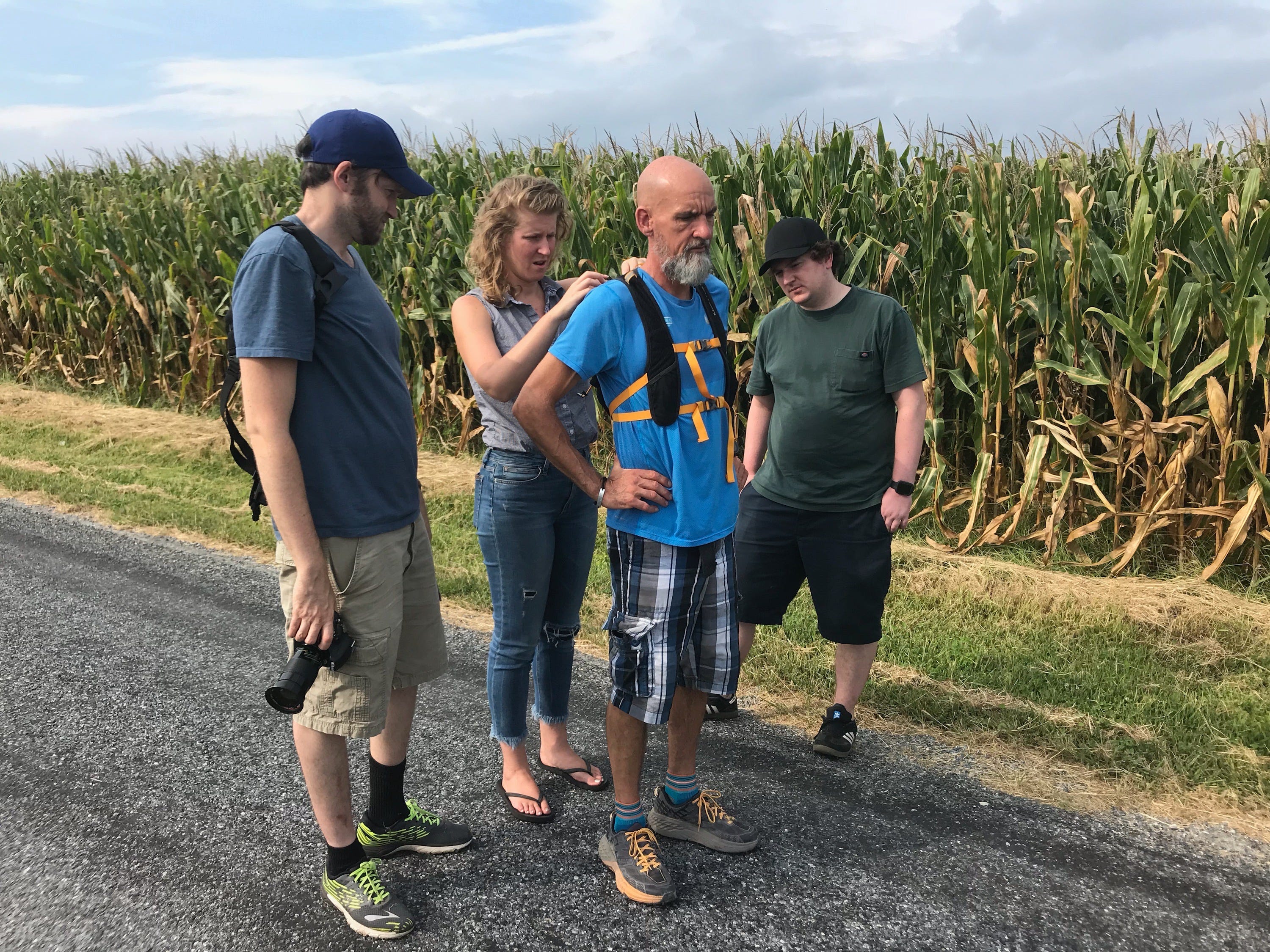
Dr. June often repeated the ultramarathoner’s mantra:
Relentless Forward Progress.
In running, it means you don’t have to be perfect, look good, or be fast — you just have to keep moving. When it gets hard, you don’t stop. You manage discomfort, break distance into small chunks, and go step by step.
Dr. June applied this same philosophy into literally developing a cure for leukemia.
Getting to make this film remains one of the highlights of my career. Earning the trust of Dr. June and the Whitehead family, and weaving together science, heartbreak, ingenuity, and resilience—this story combined my deepest passions. I feel like the film still hasn’t found the audience it deserves, so if you’re looking for a story that inspires, shatters, and restores: watch it here.
REAL TALK: RELENTLESS FORWARD PROGRESS
Break big goals into smaller steps.
I thought about my race in 3-mile chunks. I think about our business in 3–12 month phases that ladder up to our long-term global domination. Even the mental exercise of breaking down the steps to get to where you want to go is so helpful in visualizing what the path could look like and what you will need for the journey.
If you don’t know where to start: ask your AI of choice to help break down your goal into steps, and then you can iterate and tailor it to reality.
Care more about moving forward than proving you are right.
This is a place where I see leaders in every industry miss the mark.
People fail when being right becomes more important than progress.
Moving forward requires making countless decisions and trying many, many things, which means sometimes being wrong. The danger comes when ego takes over:
We either spiral in shame, or
We cling to the wrong decision and build a whole future on defending it.
Let the goal be bigger than your ego. Progress > pride.
TOOLKIT


Case Study:
Of Medicine and Miracles required its own Relentless Forward Progress. A 12-year journey. Short film → feature. Multiple funding rounds. Creative detours. A pandemic. A rotating ecosystem of collaborators. And the extraordinary persistence of legendary producer Robin Honan — who truly shepherded the film through every phase (and also had twin boys in the middle of it all). Would love to know what is most helpful to you all in your Toolkit:
Relentless Forward Progress (The Book!):
It’s not just a mantra, it’s a book! For those that love running way more than I ever will, or are interested in diving deep into the concepts that inspired Dr. Carl June, give it a read.
GOLDEN NUGGET
Spend it if you got it.
I know this sounds financially reckless — and I am effectively the CFO of Culture House — so let me clarify. I don’t mean spend carelessly. I mean:
Use the resources you have to make tangible progress, even if you don’t have everything yet.
Documentaries often begin without full funding. You rarely start with enough to get to the finish line. But if you have enough to do something real, do that thing.
If you have:
enough to shoot a few days → shoot
enough to edit one scene → edit
enough to cut a sizzle → cut the sizzle
A concrete artifact — something shown, not just described — moves the work forward. It builds confidence, momentum, and partnership. It unlocks the next step, which unlocks the next, and the next.
Relentless Forward Progress. Use what you have to get to the next mile marker, and just keep going.
Get after it out there,
Nicole